Dear Colleagues and Community Members,
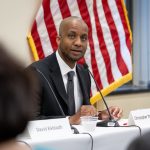
My name is Aria Fani, and I am honored to serve as the new Director of the Middle East Center (MEC). My home department is Middle Eastern Languages and Cultures, where I teach courses on Persian literature and translation studies. I step into this role with deep conviction that MEC can serve not only as an intellectual hub on campus but also as a space for reflection and community building for MENA Washingtonians.
I arrived at the University of Washington in 2019 BC (before COVID), a moment that has reshaped how we learn, teach, and connect. In recent years, MEC has faced structural challenges, including the loss of Title VI funding. At the same time, our community continues to grieve Israel’s ongoing genocidal assault on Gaza and the senseless killing of our recent graduate, Ayşenur Ezgi Eygi, in the occupied West Bank in September 2024. While despair is understandable or even inevitable right now, inaction is unacceptable.
There are reasons for some optimism. Under the new configuration of JSIS Division 2, MEC benefits from a highly capable and reliable team: Nick Gottschall as Associate Director and Sameera Ibrahim as Program Operations Specialist. Their leadership has strengthened MEC’s programming and outreach. The division also includes African Studies, Latin American & Caribbean Studies, and the South Asia Center, and Center for Southeast Asia and Its Diasporas—an arrangement that will foster collaboration across area studies and resist the silos that often limit our work.
Looking Back: AY 2024–25
Last year, I had the privilege of co-chairing the Faculty Council with my colleague Rawan Arar, and we are grateful to JSIS Director Danny Hoffman for entrusting us with that responsibility. Together, we learned that much like the shifting conceptualizations of the “Middle East,” there are multiple approaches to running a center dedicated to its study. Rather than reacting to every new crisis, we aimed to build a proactive and durable foundation for MEC. I remain in close dialogue with Rawan about MEC’s direction (also because making her laugh brings me joy).
One of the most significant moments of the past year was the October 25 memorial for Ayşenur Eygi, attended by more than 750 people. Students, faculty, community members, and the families of Ayşenur and Rachel Corrie gathered to honor her life of activism and service. In conversation with Ayşenur’s family and UW peers, MEC launched a public lecture series in her honor, with an inaugural talk by Dr. Emek Ergun, the 2024 winner of the Fatema Mernissi Book Award. Drs. Nicole Watts and our own Mediha Sorma also presented in the lecture series. The MEC initiative was recognized by the Washington State House in Resolution 4661, which praised the series as a contribution to “public education, dialogue, and civic engagement.”
Going forward, the annual Ayşenur Eygi Memorial Lecture will take place every spring quarter, highlighting decolonial, feminist, and anti-imperialist voices that illuminate Middle Eastern histories, cultures, and struggles—while also building communities of practice beyond the classroom. We are excited to announce the spring 2026 speaker in due time!
Looking Ahead: AY 2025–26
We are planning a range of exciting events, including:
- Writing group
- The NMES (and Middle East-studying friends) writing group is back, and this time sponsored by the MEC! Students would get together with their laptops to spend time writing, followed by going out to dinner. Please contact Sergen Avci (savci@uw.edu) if interested in the year-long writing group.
- Student stakeholders
- This year, MEC is working closely with the Palestinian student organization Zeytoon on efforts to bring Gazan students to UW and offer community-facing programming such as a workshop on the Palestinian art of tatreez (embroidery).
- Civic engagement
- As part of MEC’s mission to facilitate critical dialogue on the Middle East, we are organizing a town hall with Olympia lawmakers focused on the unique needs and aspirations of MENA communities in Washington State in early December.
- Colloquium
- A majlis-style research forum where faculty and graduate students share their works either in pre-circulated or presentational format. We will announce our autumn colloquium soon. Refreshments will be served.
We will open the academic year with an important literary gathering: Translation, and the Short Form in the Eurasian Periodical. Co-organized by NMES doctoral candidate Anna Learn and Arizona State University professor Dr. Razieh Araghi, the symposium brings to our campus leading voices in world and comparative literature, including Drs. Francesca Orsini and Preetha Mani. This symposium is supported by an impressive group of co-sponsors across various departments and programs that reflects MEC’s renewed orientation: multidisciplinary, collaborative, and cross-departmental.
Staying Connected
Please visit our website regularly for updates on MEC events and course offerings. Ultimately, the vitality of the Center depends on our care and energy. As JSIS’s oldest area studies center, a bold and active MEC can play a crucial role on our campus and beyond. If you have colleagues at UW (faculty and students) or in the Seattle area who may be interested in MEC updates and activities, please send them our way to be added to the MEC listserv.
I look forward to exchanging ideas with you—whether over tea or at one of our gatherings. Please do not hesitate to reach out. Our work is cut out for us—bismillah!
Warmly,
Aria Fani
Director, Middle East Center