Program Start Date: Oct 13 2026
Location: Online program
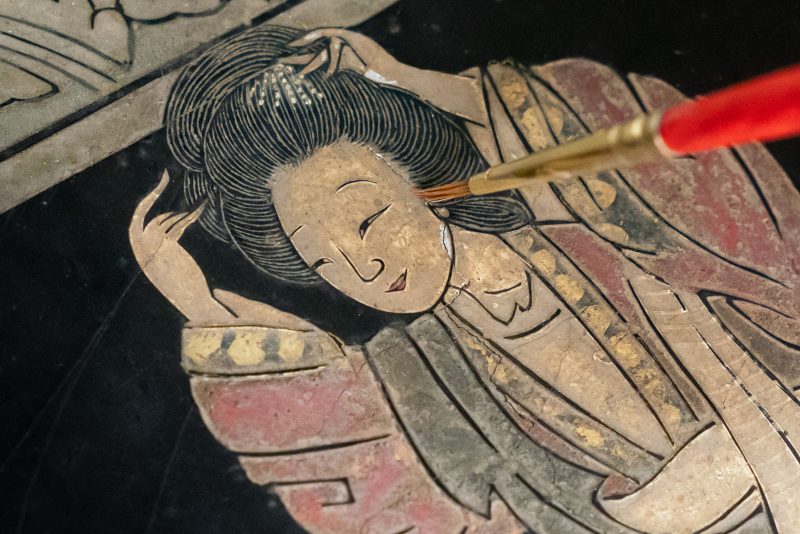
Image: Detail, Spring Morning in the Han Palace, China, Qing dynasty, Kangxi reign, 1672, twelve-panel kuancai lacquer screen; black lacquer on wood core with carved and pigment and gold filled (kuancai) decoration, Gift of Charles Lang Freer, Freer Gallery of Art, F1906.42a–l. Image by Colleen Dugan Educators joined us for this unique opportunity to learn
Program Start Date: Aug 12 2026
Location: Online program
The East Asia Resource Center invited middle and high school educators to join the Global Asia(s) Summer Book Club from June to August 2026, an opportunity to partake in an online professional development reading series built around contemporary novels that trace the movement of people, ideas, and stories across place and time. Designed for educators
Program Start Date: Aug 3 2026
Location: Online program
Application for this program has now closed. Program Details Educators joined the East Asia Resource Center and the Seattle Asian Art Museum’s Atsuhiko and Ina Goodwin Tateuchi Conservation Center for an up-close and in-depth exploration of East Asian paintings. Over the course of this five-day institute we studied East Asian painting formats, functions, and the ways
Program Start Date: Jul 28 2026
Location: Online program
Educators joined us for our annual Write About Asia: Freeman Award Winners Writer’s Workshop, an online professional development series centered on award-winning children’s and young adult literature from East and Southeast Asia. Facilitated by Lyn Jackson and Nora Douglass, the workshop gave participants the opportunity to read and write about selected 2025 Freeman Award
Program Start Date: Jun 16 2026
Location: Online program
This online seminar was an introductory overview of modern Chinese history. Class meetings included a lecture component that provided a “lightning round” survey of major events in the twentieth century as well as a discussion component during which participants were invited to share their questions and reflections. In addition to the textbook (David Kenley’s Modern
Program Start Date: May 28 2026
Location: Online program
This program is now full and registration has closed. Educators joined us for a movie and book club and stepped into Shoji Morimoto’s life “as a rental person who does nothing.” His short memoir (by the same name) chronicles his adventures providing a service to “the lonely and social anxious.” We also focused on Rental Family,
Program Start Date: May 9 2026
Location: Seattle, WA
Write About Asia is a recurring, annual writing workshop offered by the East Asia Resource Center at the University of Washington in conjunction with the Seattle Asian Art Museum’s (SAAM) Gardner Center for Asian Art and Ideas and its seasonal Saturday University Lecture Series, during which participants delve into new themes with a different speaker each week.
Program Start Date: Apr 22 2026
Location: Online program
China is home to one of the world’s most iconic architectural feats, the ancient Great Wall, built to guard its borders. Today, it is also known for the “Great Firewall,” the vast digital system that regulates and restricts online activity within the country. This modern wall limits access to many social media platforms and
Program Start Date: Mar 24 2026
Location: Online program
Educators joined us for a discussion of the narratives contained within and beyond a painting, sculpture, or larger artistic program. In this series we explored artistic objects and religious sites by considering the iconographic details, historical context, and larger story told when we examine the function and purpose of each object. These sessions were
Program Start Date: Mar 18 2026
Location: Online program
Step into the daily life of Hirayama, a Tokyo public-toilet cleaner whose routine becomes a meditation on attention, solitude, and meaning. Nominated for Best International Feature at the 2024 Academy Awards, Perfect Days (2023) invites viewers into a carefully observed world shaped by work, habit, and quiet discipline. Along the way, we see Hirayama’s devotion