UPDATED International Studies – General Major (AUT 2026 & after)
Capstone Courses: 2026-27 Academic Year
Jackson School Capstone Courses for the Academic Year of 2026-2027
DRAFT: This page is a work in progress, we are trying to keep it as current as possible.
NOTE: These are subject to change; we will use the JSIS majors list-serve if any changes occur.
FALL 2026: Public Writing in International Studies Capstone
What is this capstone about: This is an intensive, workshop-style seminar designed for advanced undergraduate Jackson School students. Students will to learn how to translate specialized academic knowledge into clear, engaging, accessible, and professional writing for a non-expert/academic audience.
Key skills developed: Public communication, Short-form writing, constructive editing, revision process, and professional versatility (build your portfolio for careers beyond academia)!
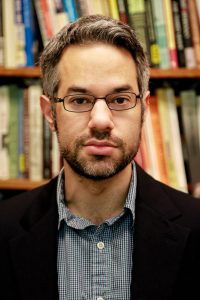
Scott Radnitz
JSIS 490 A – Public Writing in International Studies (SSc, W)
Topic: Political Violence
Course Description: In recent years, many countries around the world, including democracies, have been afflicted by high levels of political violence. This course will engage students in public writing about the causes and consequences of political violence around the world.
Instructor: Scott Radnitz
Questions? Email srad@uw.edu

Daniel Bessner
JSIS 490 B – Public Writing in International Studies (SSc, W)
Topic: Rethinking U.S. Foreign Policy
Course Description: Today, the future of U.S. global leadership is in serious doubt. Though the United States confronts myriad challenges, there is neither a popular nor elite consensus on the proper role the nation should play in world affairs. In this course, students will study the history, theory, and practice of U.S. foreign policy in order to produce several pieces that will provide the public and policymakers with guidance on how to manage and plan the future of U.S. foreign policy. Students will workshop these pieces with peers, who will edit them for structure, style, and argument.
By the course’s end, students will have learned the history of several issues relating to U.S. foreign policy; will have developed the ability to connect this history to contemporary events; will have learned to place their opinions in dialogue with both peers and public intellectuals; will have improved their peer-review abilities; and will have developed the writing skills that enable them to communicate effectively, efficiently, and compellingly to both the public and elites.
Instructor: Daniel Bessner
Questions? Email dbessner@uw.edu
WINTER 2027: Task Force Capstone
What is this capstone about: This is a senior-level policy capstone course that equips students with professional skills in policy analysis, collaborative research, and real-world simulation. Students produce rigorous, action-oriented policy reports, work in teams under tight deadlines, and defend their recommendations before external experts.
Key skills developed: Policy analysis and writing, teamwork and collaboration, professional communication, project management, research methods, and networking!
TASK FORCE WEBSITE
TASK FORCE CAPSTONES – ONLY in Winter Quarter

Jessica Beyer
JSIS 495, SECTION A: Task Force (SSc, W)
Topic: The End of US Technology Dominance?
Course Description: In 2013 when revelations from Snowden’s files hit the public, the number of voices that had been expressing concerns about US hegemony in the global internet infrastructure and the world’s dependence on US-based tech sector products increased. Since 2013, technology infrastructure has become even more wrapped up in geopolitics including (but not limited to):
- Increasing US and China competition over global market share and accusations of espionage;
- Rising Russian and other state attacks on undersea internet cables tied to tensions with the US and other allies;
- Escalating Iranian and other state strikes on US companies’ data infrastructure;
- Expanding numbers of malicious actors targeting vulnerabilities in widely used tech products that originate from the US;
- Increasing amounts of global outages due to dependence on single US-based tech providers, such as the 2024 CrowdStrike outage;
- Emerging risks to global resources such as the Common Vulnerabilities and Exposures (CVE) Program because of US policy changes; and,
- Broadening concerns related to many of the world’s biggest AI companies all being US based.
The current Trump administration’s approach to international relations has supercharged these concerns. In response, actors all over the world have begun debating whether to move away from US-based technology products, infrastructure, and influence. This task force will research this changing landscape and offer recommendations to the US government.
Instructor: Jessica Beyer
Questions? Email jlbeyer@uw.edu

Roberto Dondisch
JSIS 495, SECTION B: Task Force (SSc, W)
Topic: Diplomacy 2035: Reimagining Diplomacy for a Fragmented World
Course Description: The era of the ‘Grand Embassy’ is being disrupted. In a world where a single tech CEO can influence a war zone more effectively than a UN resolution, what is the role of the modern diplomat? How should modern diplomats be trained? This Task Force isn’t just about studying history; it’s about writing the playbook for 2035. We will go beyond the Palais des Nations of Geneva to explore the frontiers of AI-driven statecraft, ‘digital sovereignty,’ the return of grand power diplomacy and the evolution of the role of non-state power brokers. Together we will identify what will the future diplomat need as part of its toolkit and propose ways to do so. If you want to understand how to wield influence in a world where power is networked, decentralized, and increasingly digital, this is your capstone. You won’t just learn about the future of diplomacy—you will design it for the people who practice it by developing proposals for the training of the future diplomat.
Instructor: Roberto Dondisch
Questions? Email robertod@uw.edu

Vanessa Freije
JSIS 495, SECTION C: Task Force (SSc, W)
Topic: Violence against Journalists in Mexico
Course Description: In Mexico, journalists face the most violent and dangerous landscape for reporting—outside of a war zone—in the world. Reporters face threats and pressures not only from organize crime groups but also from public officials and private corporations. To weather these challenges, Mexican journalist teams have implemented innovative systems for keeping themselves safe. While in many ways exceptional, Mexican reporters simultaneously encounter challenges shared by media all over the world—diminishing public trust in traditional journalism, competition from social media, threats from artificial intelligence, and a highly polarized political landscape. This Task Force will investigate Mexico’s case to assess the broader threats to investigative journalism and information access.
Instructor: Vanessa Frejie
Questions? Email vfreije@uw.edu

Tabitha Mallory
JSIS 495, SECTION D: Task Force (SSc, W)
Topic: Geoeconomics of the Deep: The New Maritime Scramble for Africa: Power, Crime, and the Politics of Ocean Governance
Course Description: This capstone explores the rapidly evolving maritime domain surrounding Africa, a vast and strategically vital space that underpins trade, food security, and economic development across the continent. While African ports and ocean resources are reimagined as part of booming blue economies, the near waters of the continent serve as the far waters of global competition, in which development ambitions intersect with the interests of external actors, including China. Students will examine a range of maritime challenges, including piracy, illegal fishing, trafficking, and environmental degradation, while also considering a deeper question: whose security is being protected? International responses have often prioritized protecting resource access and foreign investments, even as threats such as toxic dumping and illicit oil extraction undermine the health and livelihoods of millions of Africans. The course will explore emerging African-led ocean governance frameworks, including those established through the African Union, as well as regional architectures aimed at strengthening coordination over maritime spaces such as the Gulf of Guinea and the Western Indian Ocean. Drawing on insights from international law, political economy, and security studies, students will develop policy-relevant analyses of one of the world’s most dynamic maritime frontiers.
Instructor: Tabitha Mallory
Questions? Email tabitha@uw.edu

Saadia M. Pekkanen
JSIS 495, SECTION E: Task Force (SSc, W)
Topic: Japan’s AI Strategy
Course Description: China’s vision for an alternative world order are reflected in high-profile diplomatic initiatives such as the Belt and Road Initiative, the Global Development Initiative, the Global Security Initiative, and the Global Civilization Initiative. China also has a diplomatic strategy for the space domain, which stretches across technologies, regions, and actors around the world. But its longstanding activities related to space diplomacy are not well known or widely appreciated. This task force investigates the causes and consequences of China’s space diplomacy, with a focus on its implications for global leadership and governance in outer space affairs.
Instructor: Saadia Pekkanen
Questions? Email smp1@uw.edu

John Koenig
JSIS 495, SECTION F: Task Force (SSc, W)
Topic: After NATO? European Defense in a New Era
Course Description: European defense and security are undergoing the most fundamental transformation in 75 years. The Russo-Ukrainian War is the most devastating conflict in Europe since World War II and has elevated the threat of war and subversion from the east. A range of other challenges are worsening, especially on Europe’s southeastern and southern periphery. Meanwhile, the broad transatlantic alliance has frayed, most acutely during the second Trump Administration, undermining trust in the United States and the North Atlantic Treaty Organization it dominates. European states have responded by stepping up investments in defense – nationally and in the framework of both NATO and the European Union – but they have not been able to agree on what they want – full defense and security autonomy, most likely in the framework of the EU, a more Euro-centric NATO that continues to rely on the US, or a looser arrangement that includes more ad hoc regional cooperation.
Which of these frameworks offers the best prospects for building a capable and resilient “Europe de la defense” that can face threats from east, north, south – and west? This task force will engage with these emerging challenges and assess the advantages and disadvantages of alternative models for European defense in a rapidly changing security environment.
Instructor: John Koenig
Questions? Email johnmonroekoenig@gmail.com
SPRING 2027: Advanced Readings in International Studies Capstone
What is this capstone about: Seminar capstone focused on the in-depth reading, analysis, and discussion of major texts regarding complex global issues. It acts as a culmination of the International Studies major, bridging academic knowledge with professional readiness through critical analysis and scholarly writing.
Key skills developed: Critical thinking and analysis, Advanced research and reading, professional writing, high-level academic discussion and debate, scholarly communication, synthesis of global issues

Noam Pianko
JSIS 498 A – Advanced Readings in International Studies (SSc, W)
Topic: Antisemitism in International Context: History, Concept, and Controversy
Course Description: Antisemitism is among the most debated concepts in contemporary public life — invoked in federal policy, campus controversies, electoral politics, and international conflict, yet deeply contested in its meaning, boundaries, and application. This advanced seminar takes that tension seriously.
The seminar proceeds from the recognition that antisemitism is a form of hatred toward Jews with devastating historical consequences and living contemporary expressions. At the same time, we will take seriously scholarly and political disagreements over how it is defined and applied. Students will examine the diverse forms antisemitism takes across political movements and public discourse, trace the longer history of anti-Judaism, and explore how modern notions of antisemitism emerged and have been reinterpreted across changing political contexts. Particular attention will be given to current debates over the relationship between antisemitism and anti-Zionism — one of the most contested and consequential questions in contemporary scholarship and policy.
This is a discussion-intensive seminar for students who want to think carefully about a concept that is both historically deep and urgently present. No prior background in Jewish history is required, though students should be willing to take seriously perspectives rooted in very different assumptions and experiences, and to engage contested questions with intellectual curiosity rather than ideological certainty.
Instructor: Noam Pianko
Questions? Email npianko@uw.edu

Glennys Young
JSIS 498 A – Advanced Readings in International Studies (SSc, W)
Topic: Russia’s War of Aggression Against Ukraine
Course Description: In February 2022, the Russian Federation invaded Ukraine in a so-called “special operation.” Russian leader Vladmir Putin expected Ukraine to capitulate in a few days. Instead, Ukraine not only fought the Russian invasion valiantly, mounting defiant resistance and demonstrating unexpected military strength. In a recent New York Times opinion piece, David French wrote that the Ukrainian Army is likely “the largest and most battle-hardened land force in the Western world.” Ukraine, as French reminds us, is “arguably the world’s leader in drone warfare.” The stalemate that Ukraine has achieved has had enormous human costs. According to the Center for Strategic and International Studies, combined Ukrainian and Russian casualties (killed, wounded, missing) might soon reach two million. In this course, students will read, talk, and write about Russia’s war of aggression against Ukraine. Among the topics we will examine are the debated origins of the war, the role of US and European strategy and aid during the war, what it has been like for Ukrainians to live under war and occupation, and the implications of the war for Ukrainian and Russian politics.
Instructor: Glennys Young
Questions? Email glennys@uw.edu
How to Meet Graduation Requirements with JSIS Courses – also in the side menu
- SUMMER 2026
- AUTUMN 2026
- WINTER 2027
- SPRING 2027
- SUMMER 2027