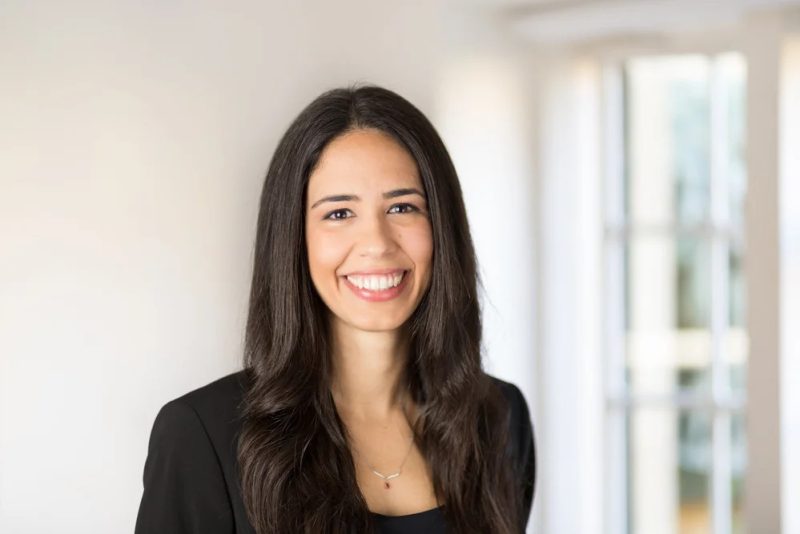
The Middle East Center recently sat down with Asli Cansunar, Associate Professor of Political Science. Cansunar began her three-year term as the Middle East Center director this July and recently spoke about her background and visions for the program.
What sparked your interest in comparative political economy in the Middle East?
It is impossible to grow up in Istanbul and not be interested in the political and economic realities that shape everyday life there and across much of the Middle East. Just strolling through Istanbul can teach you more than a quarter-long course in political economy. What is inequality, for example? How do people living in mansions on the Bosphorus coexist with street sellers without these inequalities giving rise to more open class conflict? How do bazaars coexist with American-style malls, which were still new when I was growing up? What will these new malls do to the bazaars we love and cherish? What is quality of life, and what makes people satisfied with their lives? How do we measure these things? Is it living in a high-rise in the new downtown, or is it being able to “take a long walk along the Bosphorus,” as Orhan Pamuk put it?
I think these experiences made me very curious about how to think about these things and, perhaps more importantly, how to measure them in a political and state setting where measurement is not always taken very seriously. Those early years and experiences very significantly shaped the scholar I am today.
What are you working on these days?
I am working on something directly related to these questions. One part of my research investigates how states with limited or uneven capacity use policy to build authority, manage diversity, and consolidate power. In Triaging Responsiveness in New States with Limited Capacity, I ask a fairly straightforward question: When new states do not have the resources to address every citizen demand, how do they decide which ones to respond to?
Other questions follow this fundamental question, of course. Does the content of the demand matter? Does the socioeconomic or ethnic background of the person making it matter? Does it matter where they live? Are urban areas more likely to receive a response? And what do these patterns mean over time for electoral behavior and trust in the state?
I am trying to answer these questions using citizen petitions and state responses from Republican Turkey between 1923 and 1950, alongside data on elections, public service delivery, tax collection, and protests against the regime. These records allow me to follow both the immediate responses to citizens and their longer-term consequences for political development and the relationship between citizens and the state.
What excites you most about the upcoming year and what do you hope to accomplish as director?
I am most excited about connecting what we do here academically with the broader communities we serve across Washington. In particular, I am excited about bringing in speakers whose work speaks to the interests and concerns of Middle Eastern and North African diasporas here, and connecting these communities more closely to the Middle East Center. I hope people will see their own questions and interests reflected in the conversations we have at the center and feel that they can be part of those conversations.